
GMC AT4 Technical Methodology & Engineering Review Desk
Our editorial and technical testing desks provide empirical clearance verifications, torque standards, and electrical schematics for GMC truck platforms.
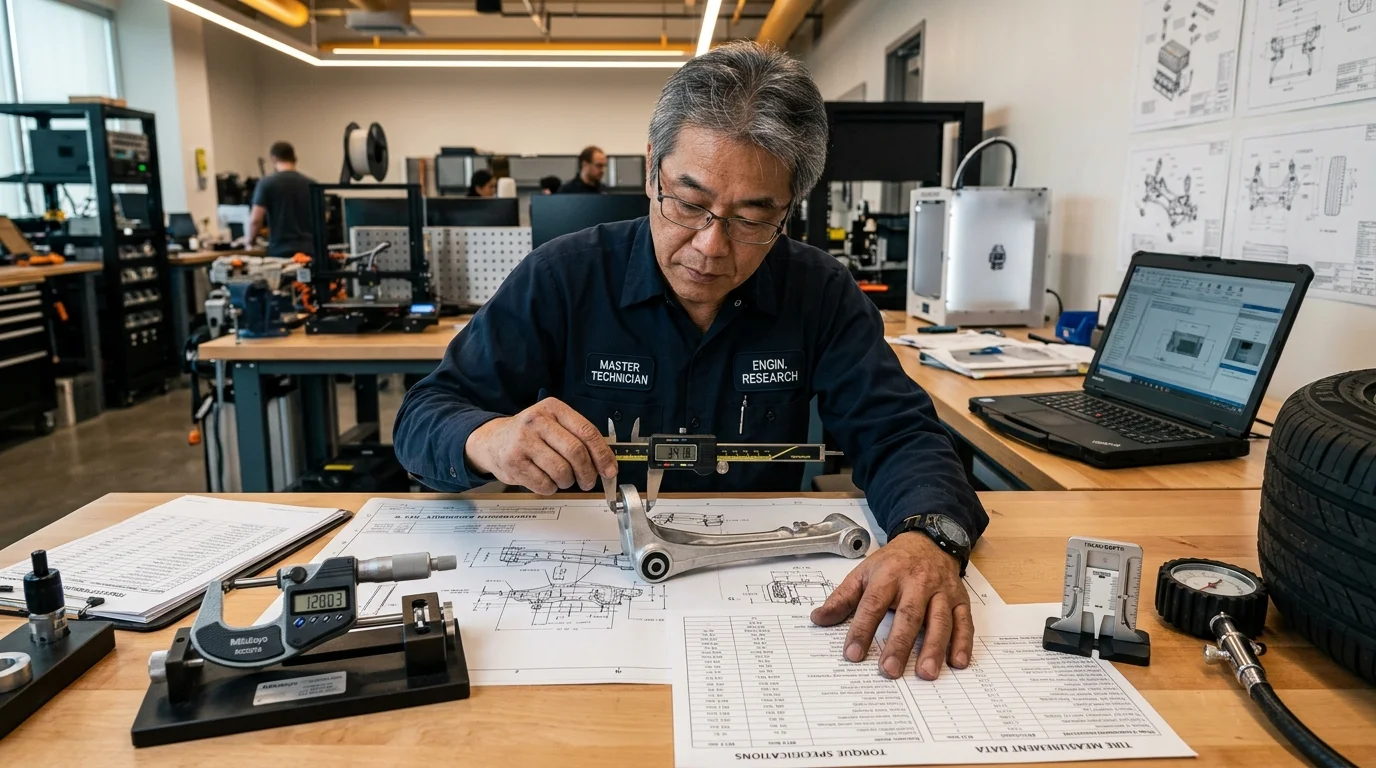
Master Certified ASE Automotive Technician Review & Validation
Truck Tire Fitment & GMC AT4 Technical Systems Hub provides certified Master ASE Automotive Technician verified tire fitment mathematics, torque specifications, fluid capacities, and electrical schematics.
In the automotive aftermarket, tire clearance recommendations are frequently distorted by anecdotal forum reports that overlook dynamic suspension travel, wheel offset variations, and spring rate compression. At our GMC AT4 technical systems hub, every mathematical solver, torque specification, and wiring pinout is vetted against original equipment manufacturer (OEM) technical service bulletins (TSBs), Society of Automotive Engineers (SAE) standards, and physical vehicle laser measurement.
Our technical review team includes ASE Master Certified Automobile Technicians (A1–A8 certified) with extensive dealership and fleet engineering backgrounds in General Motors light truck platforms.
Empirical Tire Fitment & Mechanical Measurement Methodology
We employ a four-point verification protocol before validating any tire and wheel combination:
- Laser Coordinate Articulation Mapping: Vehicles are placed on four-post alignment racks with sway bars disconnected to cycle suspension from full jounce (+4.5 inches) to full rebound droop (-3.5 inches). Minimum dynamic clearance must exceed 0.5 inches (12.7 mm) to guarantee zero rubbing in off-road environments.
- Scrub Radius Trigonometry: We evaluate how alterations in wheel offset alter the steering axis inclination (SAI) intersection point relative to the tire contact patch center, preventing dangerous high-speed steering instability.
- Speedometer & TCM Pulse Rate Recalculation: Using GM SPS2 calibration tools, we measure vehicle speed sensor pulse generation at the transmission output shaft to determine the exact shift-scheduling lag caused by tire outer diameter expansion.
- Load Range Deflection & Thermal Pressure Growth: We test Cold Inflation Pressures across Tire and Rim Association (TRA) engineering load curves to establish ideal highway vs trail tire pressure recommendations.
Editorial Integrity, Safety Standards & Nominative Fair Use Disclosures
This publication is an independent technical reference and educational hub. "GMC", "Sierra", "Canyon", "AT4", "AT4X", "Duramax", "EcoTec3", "Hydra-Matic", and related terms are registered trademarks of General Motors LLC. Use of these nominative trademarks is solely for identification, descriptive compatibility, and educational reference under federal nominative fair use doctrine.
All calculations and technical diagrams are provided for engineering analysis. Vehicle owners and technicians must verify physical fastener torque and clearance tolerances before operating modified vehicles on public roadways.